
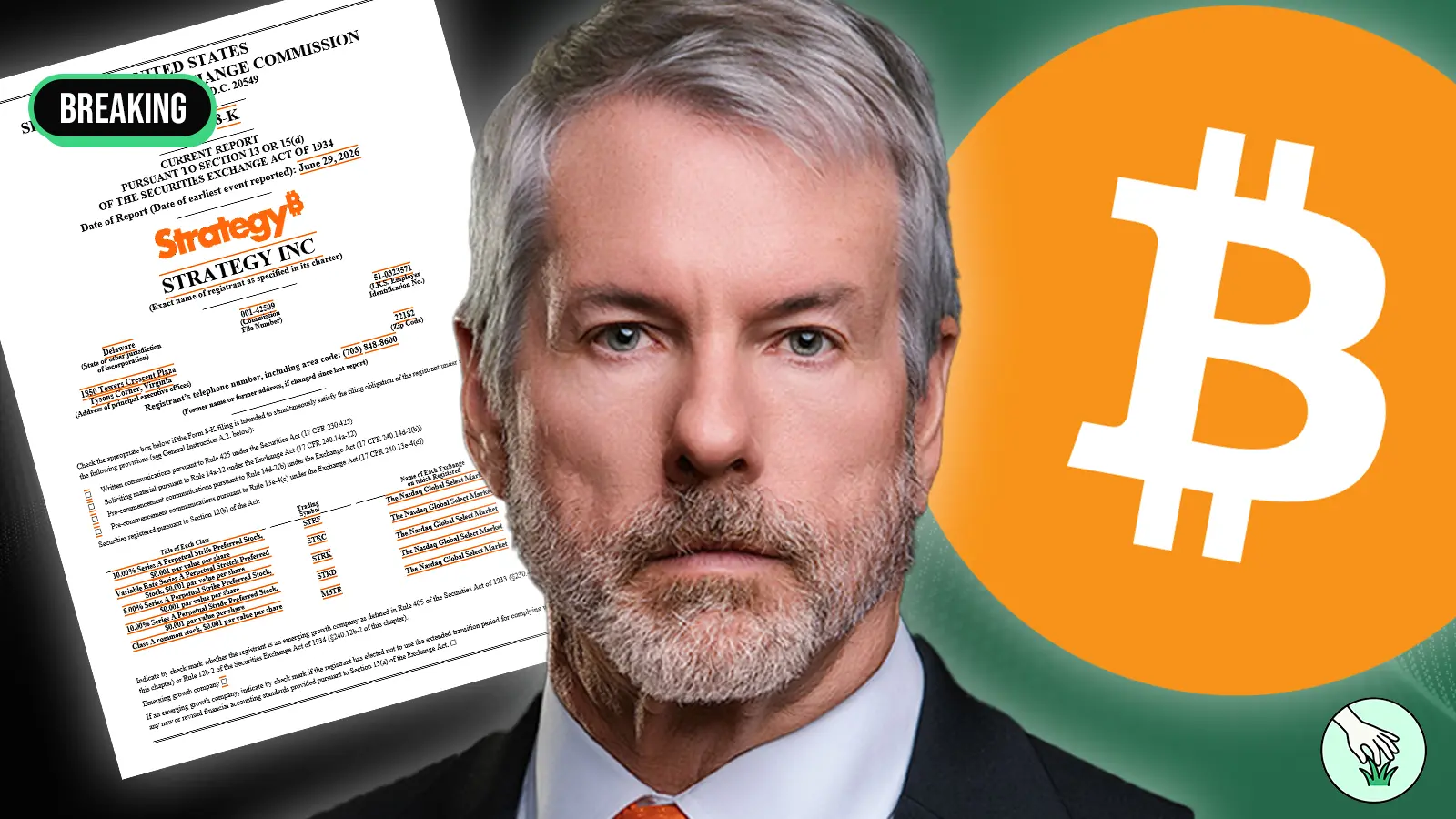
Strategy’s latest SEC filing shows a week of selling $467 million in its own shares, buying zero Bitcoin, and stacking a $3 billion pile of dollars. The machine that defined the bull market is now running its famous loop in reverse, and the filings let you watch it happen beat by beat.
For four years, Strategy ran the most famous machine in crypto. It worked like this: sell MSTR shares to the market, use the cash to buy Bitcoin, watch the Bitcoin make the shares worth more, sell more shares, buy more Bitcoin. Critics called it a perpetual motion machine; fans called it the infinite money glitch; Michael Saylor called it inevitable and promised, repeatedly, on the record, for years, that the company would never sell its coins.
According to the company’s July 13 SEC filing, here is what the machine did last week: it sold 4.82 million MSTR shares for $466.7 million in net proceeds, bought zero Bitcoin with the money, and parked the cash in a US dollar reserve that has now reached $3 billion.
Sell shares. Stack dollars. Buy nothing. Same loop, opposite direction.
The receipts, in order
None of this arrived out of nowhere. It arrived in filings, one beat at a time, and it reads like a company slowly translating “never” into corporate English.
In late May, Strategy sold 32 BTC. About $2.5 million, pocket change against its stack, but its first sale since 2022 and the first crack in the never-sell narrative. On June 29 came the formal architecture: a “Digital Credit Capital Framework” whose board-approved bitcoin monetization program permits future BTC sales of up to $1.25 billion to build dollar reserves and fund dividend and interest obligations [LINK: original June 29 filing article]. A week later the program fired for real: 3,588 BTC sold for roughly $216 million on July 6, the largest Bitcoin sale in the company’s history [LINK: Strategy sells 3,588 BTC article], and, with the coins going out the door around $60,000 against an average cost basis the company’s filings put around $75,500, one booked at a realized loss reported at roughly $53 million. The perma-buyer didn’t just sell; it sold underwater.
And now this week’s filing completes the picture: no Bitcoin bought at all, a sentence that would have read as satire in 2024, while the share-selling machinery keeps running and the dollar pile grows.
Why the machine flipped
The honest explanation is more interesting than the doom version, and it’s mostly arithmetic. The old flywheel only works while the market values the company at a premium to its Bitcoin: issue shares above NAV, buy coins, everyone wins. But MSTR trades roughly 82% below its peak, and the company’s market valuation recently slipped below the value of its Bitcoin holdings, an mNAV under 1.0. Below that line, issuing shares to buy Bitcoin destroys value for existing holders rather than creating it. The glitch doesn’t work in reverse gear; it just dilutes.
Meanwhile the obligations built during the glory years still need feeding. The same June framework raised the dividend on its STRC preferred shares to 12%, a payout that looks less like a perk and more like the cost of keeping capital in the building, and the company has been open that the dollar reserve supports dividends, interest, and its push toward a stronger credit profile. Hence a war chest of $3 billion in the least volatile asset Michael Saylor has ever willingly held.
What this is, and what it isn’t
Deep breath before anyone prints the bank-run headline: Strategy still holds roughly 843,000 BTC, around 4% of all the Bitcoin that will ever exist, and this week it sold shares, not coins. A monetization program is permission, not a schedule; nothing in the filings says a great unwinding has begun, and the company frames all of it as active capital management rather than retreat. JPMorgan’s read is probably the fairest third-party framing available: the new policy adds “two-way risk.” The company that could only ever be a buyer can now, mechanically, be a seller too. That cuts the reflexive bull case and the reflexive doom case at the same time.
But symbolically? The symbolism is total. The loudest never-seller in the asset’s history now runs a board-approved selling program, books nine-figure realized losses, skips buying weeks entirely, and measures its war chest in dollars. Strive paused its own purchases the same fortnight. The treasury-company trade, the defining financial structure of the last cycle, isn’t collapsing so much as quietly filing its own surrender paperwork, one 8-K at a time.
The machine still exists. The machine still runs. It’s just that, as of this week’s filing, it runs the other way. And somewhere in the archives, a laser-eyed tweet promising diamond hands forever is aging exactly the way the trenches always knew it would.
Figures are from Strategy’s SEC filings and reporting at the time of writing; holdings and prices move, check live data. Nothing here is investment advice, and a strategy shift is not a solvency claim.